

A guest room can spend most of the year waiting for someone to sleep in it, even when the rest of the house is short on useful space. With a few deliberate choices, that room can support work, exercise, hobbies, storage, or quiet downtime without becoming inconvenient when visitors arrive. The trick is to favor furniture and equipment that can change roles quickly, then keep enough open space for the room to return to guest mode without a major reorganization.
Create a Home Office That Can Fold Away
A guest room is a natural place for a secondary home office because it already offers some separation from busier living areas. The challenge is preventing a large desk, filing cabinet, and office equipment from permanently taking over the room.
Wall-mounted or folding work surfaces can solve that problem. The IKEA NORBERG wall-mounted drop-leaf table includes storage for items such as desk accessories and chargers, and the work surface folds down so the unit takes up no floor space when closed. A folding chair or compact desk chair can complete the workstation without consuming much additional space.
Keep office supplies contained rather than spreading across dressers and bedside tables. A small box or drawer for chargers, notebooks, and paperwork makes it possible to clear the room quickly when guests are expected. If you work there regularly, leave only the equipment that genuinely needs to remain connected.
Let the Guest Bed Do More Than One Job
A traditional bed occupies a large section of the room whether anyone is sleeping in it or not. If you are furnishing the space from scratch, a daybed can make that footprint useful during the rest of the year.
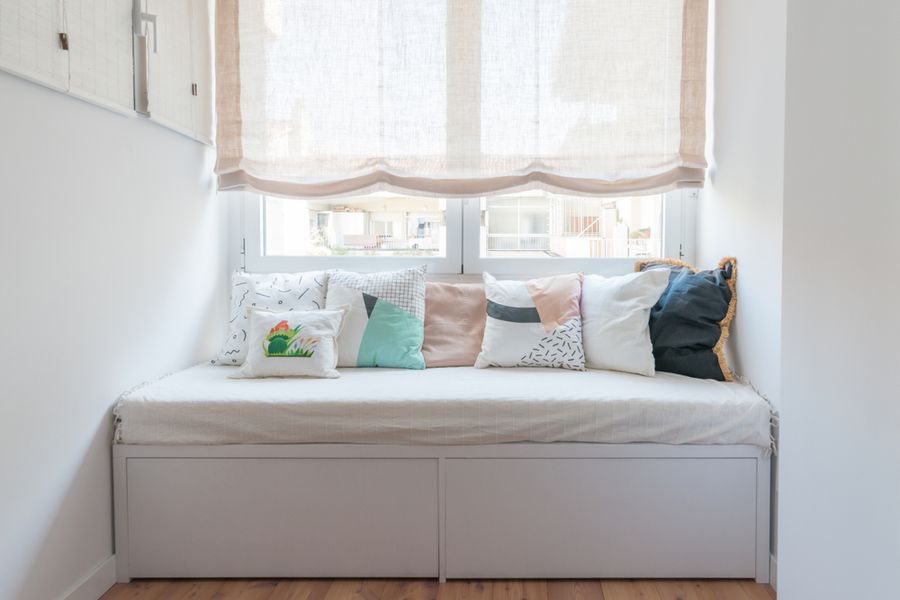
The IKEA HEMNES Daybed combines a sofa, single bed, pull-out double bed, and three storage drawers in one piece of furniture. The drawers can hold bedding, pillows, linens, or other items that need to remain nearby for overnight guests. During ordinary weeks, cushions can turn the bed into seating for reading, working on a laptop, or simply spending some quiet time away from the main living room.
If you already own a conventional guest bed, you do not necessarily need to replace it. Use the space beneath it for labeled storage containers and keep the top relatively uncluttered so converting the room back for visitors remains easy.
Reserve Open Floor Space for Exercise
A guest room can also provide a useful place for home workouts, particularly if the center of the room remains clear. A yoga mat, resistance bands, sliders, or a jump rope can disappear into a basket or closet when the session is finished.
If strength training is part of the plan, choose equipment that does not require an entire rack. PowerBlock Sport 24 Adjustable Dumbbells replace eight pairs of traditional dumbbells while measuring just 10 inches long by 5.5 inches wide per dumbbell. They are one example of how choosing compact equipment can preserve the room's main purpose while still supporting regular workouts.
Avoid turning the guest room into equipment storage with a bed squeezed into the corner. Decide how much clear space you actually need for your preferred workouts and limit fitness purchases accordingly.
Build a Reading or Hobby Corner With Hidden Storage
The room can become a useful escape even when you do not need another office or workout area. A comfortable chair, good task lighting, and a small surface for a book or drink can turn one corner into a reading spot without interfering with the guest setup.
Furniture with hidden storage can make the arrangement work harder. The IKEA STRANDMON Ottoman with Storage functions as a footrest or extra seat while providing concealed space beneath the top. That compartment could hold knitting supplies, sketchbooks, puzzles, magazines, or other hobby materials that would otherwise create visible clutter.
Keep the hobby proportional to the room. A small craft box that fits inside an ottoman is easy to move; a permanent cutting table covered with unfinished projects is much harder to clear when relatives announce a weekend visit.
Create a Simple Guest-Mode Reset
A multifunctional room works only if changing it back into a guest room is straightforward. Give everything associated with the room's secondary purpose a designated storage location before you begin using the space.
For an office, that might mean one drawer for work supplies. Exercise equipment could live in a basket beneath the bed. Hobby materials might stay inside an ottoman. Leave part of the closet or dresser empty so visitors are not forced to compete with household overflow for every available surface.
Keep guest essentials together as well. Spare sheets, towels, pillows, and basic toiletries can occupy one labeled drawer, bin, or shelf. When someone is coming, the reset becomes a short sequence: put away everyday equipment, prepare the bed, clear the nightstand, and make the reserved storage accessible.
Give the Room a Job Between Visits
A guest room does not need to remain untouched just to prove that it is ready for visitors. The better approach is to give the space a useful everyday purpose while preserving its ability to change back quickly.
A folding workstation can create an office, adaptable furniture can provide seating and storage, compact fitness equipment can turn open floor space into a workout zone, and concealed storage can support hobbies without visible clutter. Choose the secondary use your household genuinely needs, establish where everything will go when guests arrive, and the room can contribute every week instead of waiting for the occasional overnight visit.