

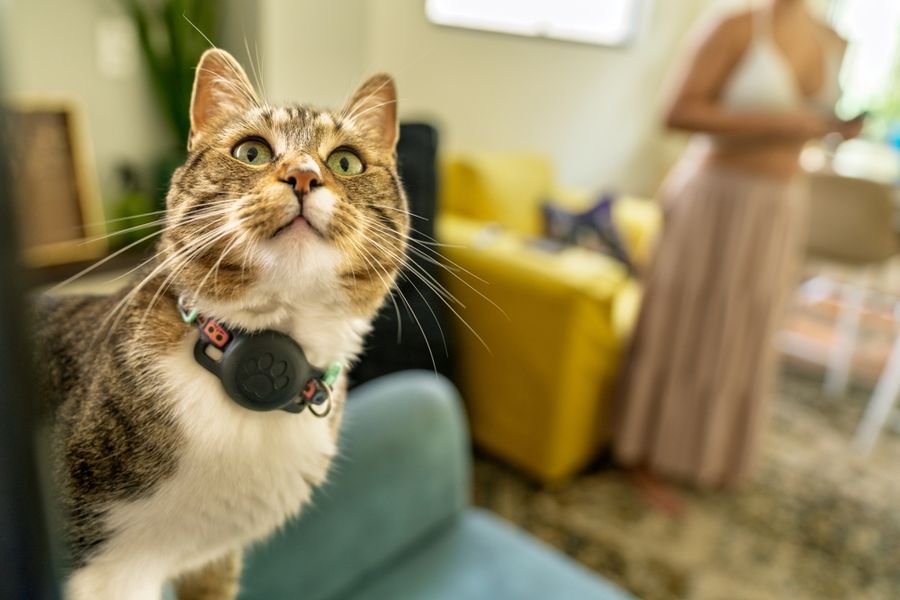
Choosing a pet tracker involves more than comparing basic location features. Cellular coverage affects whether the device can stay connected, while battery life, attachment style, escape alerts, and app functions shape how convenient it is to use every day. Pet size matters too, since a tracker that works well for a large dog may be uncomfortable or impractical for a cat or small puppy. The best choice depends on how those features fit the pet and routine.
1. Tractive DOG 6: Best for Broad Cellular Coverage
The Tractive DOG 6 takes the top position because its tracking features are backed by unusually broad cellular options for a mainstream dog tracker. It provides real-time GPS tracking, virtual fences with escape alerts, activity and health monitoring, light and sound functions, and U.S. connectivity through Verizon, AT&T, and T-Mobile where compatible service is available. The standard DOG 6 is intended for dogs above 9 pounds and can run for up to 14 days when Power Saving Zones are used.
Pros
- Access to multiple major U.S. cellular networks gives it more coverage flexibility than trackers tied to one named carrier.
- Virtual fences, live tracking, light and sound tools, and health monitoring put several useful functions in one device.
Cons
- The standard model is not intended for dogs below the stated minimum weight.
- Cellular tracking requires an ongoing subscription in addition to the tracker.
For dog owners who put location coverage ahead of everything else, the multi-network design is the decisive advantage. Owners of very small dogs or cats will need a different device despite the strong overall feature set.
2. Fi Mini: Best for Small Pets
Fi Mini earns second place because it solves one of the biggest practical problems with wearable trackers: size. The current model weighs 16 grams, attaches to most collars and harnesses, supports dogs and cats, uses Verizon for GPS and cellular connectivity, and provides real-time location tracking and escape alerts. Fi states battery life of up to six weeks, or up to three months when the tracker is used with a Fi Base.
Pros
- Its lightweight attachment design makes it better suited to cats, puppies, and small dogs than many larger GPS devices.
- Long stated battery life reduces charging frequency during normal everyday use.
Cons
- Cellular tracking is tied to Verizon rather than using the multi-network approach of the top-ranked Tractive.
- The Fi Mini does not include the night light available on the larger Fi Series 3+.
Fi Mini deserves particular attention when tracker weight and collar compatibility matter more than access to several cellular providers. Its main ranking trade-off is that its cellular path is less diversified than the DOG 6.
3. Pawfit 3: Best for Fast Live Updates
Pawfit 3 ranks highly for owners who want frequent updates during an active search. Its Find Mode can update location every five seconds, while the device also includes safety zones, activity monitoring, light and sound tracking, family sharing, and a 4G multi-network connection. Pawfit lists battery life of up to eight days and says the tracker is suitable for dogs and cats weighing more than 7.7 pounds.
Pros
- Five-second updates in Find Mode can provide much more frequent location information when actively searching for a pet.
- Multi-network 4G connectivity avoids tying the tracker to only one named cellular carrier.
Cons
- Its stated maximum battery life is shorter than the higher-ranked Tractive DOG 6 and Fi Mini.
- The minimum pet-weight recommendation makes it unsuitable for some particularly small cats and dogs.
Pawfit 3 can move ahead of Fi Mini for an owner who values rapid Find Mode updates and multi-network cellular access more than maximum battery life. The shorter charging interval is the principal compromise.
4. Petcube GPS Tracker: Best for Simple Everyday Setup
Petcube combines location and escape tools with a relatively approachable collar-mounted design. The tracker offers live GPS location, virtual fences, a built-in LED light and buzzer, activity information, and up to 30 days of battery life when its Power Save Zone is enabled. It weighs 29 grams, attaches through a flexible silicone case, and requires LTE availability and an active subscription for real-time cellular tracking.
Pros
- The combination of virtual fences, live tracking, light, and buzzer functions provides practical tools for locating a wandering dog.
- Power-saving operation can substantially extend the period between charges when the tracker spends time in configured safe areas.
Cons
- Real-time tracking depends on LTE availability, so local cellular conditions still determine whether the device can communicate.
- An active paid subscription is required for the GPS tracker to operate.
Petcube works well for owners who prioritize straightforward everyday tracking and additional visual or audible locating tools. It ranks below Pawfit because the Pawfit page provides a clearer multi-network proposition and explicitly defined five-second Find Mode updates.
5. TrackiPet: Best for International Tracking
TrackiPet rounds out the ranking with an emphasis on flexible global connectivity. The device combines GPS, Wi-Fi, and cellular technology with an international SIM, virtual boundary alerts, iOS and Android app access, and attachments designed for collars or harnesses. Its published specifications include IP67 protection and up to five days between charges depending on location-update settings.
Pros
- The international SIM and global cellular approach make it particularly relevant to owners who travel with their pets.
- Collar and harness attachments allow the tracker to work with existing pet gear rather than requiring a dedicated smart collar.
Cons
- Its stated battery period is shorter than every tracker ranked above it.
- The device requires a data subscription for its cellular communication and tracking functions.
TrackiPet becomes more attractive when international use carries greater weight than charging frequency. For primarily domestic everyday tracking, the higher-ranked options provide a stronger combination of battery endurance, escape tools, or clearly defined U.S. network support.
What Separates the Rankings
The top position goes to Tractive because access to several major U.S. cellular networks is a meaningful advantage when coverage is central to the purchase. Fi Mini falls just behind because its low weight and long battery life make it easier to live with, especially for smaller pets, but its cellular connection is tied to one named carrier.
A lower ranking does not make Pawfit, Petcube, or TrackiPet poor choices. Pawfit can move up for owners who prioritize rapid Find Mode updates, while TrackiPet becomes more relevant when international use is a central requirement.
How to Choose the Right Tracker
Choose Tractive DOG 6 if you have a compatible-size dog and want broad U.S. cellular flexibility alongside escape and wellness features. Choose Fi Mini instead when tracker size is the bigger constraint, particularly for a cat, puppy, or small dog.
Pawfit 3 deserves extra attention if frequent location updates during an active search matter most. If international travel is a regular part of life with your pet, TrackiPet's connectivity approach may justify moving it ahead of higher-ranked domestic options despite its shorter stated battery period.
Match the Tracker to Where Your Pet Actually Goes
The published order reflects the importance of coverage, practical tracking tools, and everyday ease, but a pet's size and normal environment can change which rank deserves the most attention. Start by checking the cellular coverage available where your pet spends time, then verify that the tracker is appropriate for the animal's size and existing collar or harness. A strong feature list matters only when the device can reliably fit into the way your pet actually lives.