

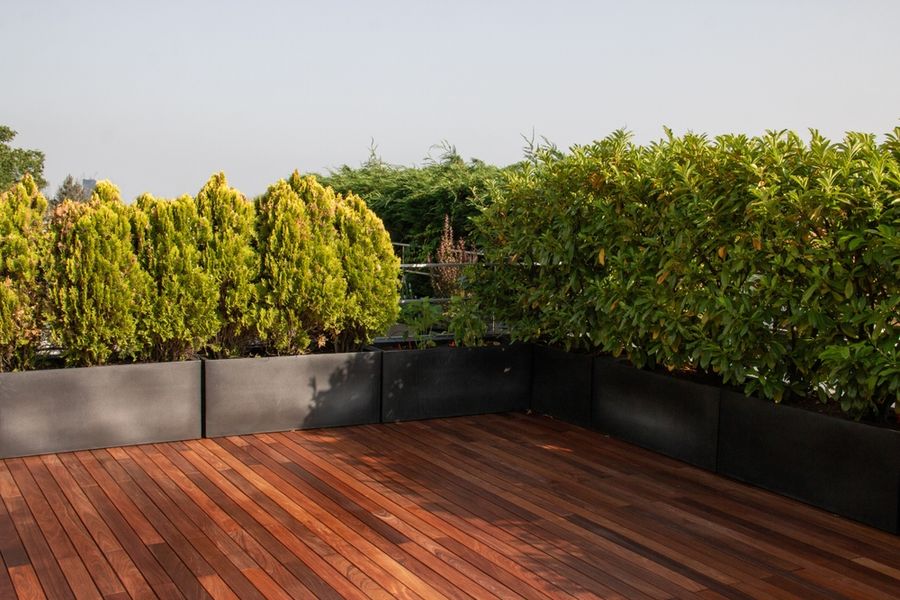
A backyard can feel surprisingly exposed even when the property itself is spacious. Neighboring windows, nearby patios, sidewalks, and open property lines can all make an outdoor seating area feel less secluded than you would like. Fortunately, creating privacy does not have to mean enclosing the entire yard with a traditional fence. Strategic plants, screens, vertical structures, and targeted barriers can block the sightlines that matter most while preserving a more open, flexible outdoor layout.
1. Build a Living Screen With Shrubs and Plants
A row of plants can soften unwanted views without creating the solid boundary of a fence. The important part is choosing plants for the actual location rather than selecting them only for height. Screening plants should suit the local hardiness zone, available light, growing conditions, and the amount of space they will have at maturity.
You also do not necessarily need a perfectly straight hedge. A mixture of plant sizes can screen specific views while producing a more natural-looking landscape. Position the tallest plants where neighboring windows or gathering areas create the biggest privacy problem, then use shorter plants to fill gaps and create depth.
Think about whether you want privacy throughout the year or mainly during the months when the backyard receives the most use. That distinction can influence whether you favor evergreen plants, deciduous shrubs, tall perennials, or a mixture.
2. Grow Vines on a Trellis
A trellis can provide vertical screening without occupying the amount of ground space required by a broad hedge. Climbing plants grown on trellises can create attractive privacy screens and are particularly useful where planting space is limited.
This approach works well beside a patio, along one end of a deck, or between a seating area and a neighboring property. Instead of screening the entire yard, place the trellis directly between the place where you sit and the view you want to interrupt.
Choose the vine carefully. Different species vary considerably in mature size, growth habit, climate suitability, and whether they remain leafy throughout the year. Make sure the support is appropriate for the mature plant rather than installing a lightweight decorative trellis that may eventually be overwhelmed by vigorous growth.
3. Place a Freestanding Privacy Screen Where You Need It
If waiting for plants to mature does not appeal, a freestanding screen can create an immediate visual barrier. It is particularly useful when the privacy problem involves one precise sightline rather than an entire property boundary.
For example, the Modern Shade Freestanding Privacy Screen sold by Lowe's is a steel outdoor panel designed for patios, decks, and backyards. Its freestanding base can be positioned on hard surfaces including concrete, pavers, and wood decks without digging or drilling.
A movable or freestanding panel can work beside an outdoor dining table, hot tub, lounge chair, or conversation area. Positioning matters more than covering maximum distance. Sit in the area you want to protect and identify exactly where the unwanted view originates before deciding where the screen belongs.
Decorative cutout screens provide partial separation while retaining some openness, while more solid designs provide greater visual coverage. Consider how much light and airflow you want to preserve before choosing a style.
4. Add a Privacy Wall to an Existing Gazebo
If your backyard already contains a gazebo or similar structure, modifying one side can be more efficient than creating a new barrier elsewhere. A privacy wall can block a neighboring sightline directly at the seating area while leaving the rest of the structure open.
The Yardistry 12-Foot Gazebo Privacy Wall, for example, is made specifically to enclose one side of several compatible Yardistry wood gazebos. The cedar wall is designed to provide additional privacy as well as shade and some protection from wind.
Compatibility is important when adding panels or walls to an existing structure. Use components intended for the particular gazebo or follow the structure manufacturer's requirements rather than assuming an accessory can safely attach to any frame.
Outdoor curtains can offer another flexible option for structures equipped to support them. They can remain open when privacy is unnecessary and close when neighbors or nearby activity become more noticeable.
5. Use Large Containers for Targeted Screening
Large planters can create privacy exactly where you need it while remaining far less permanent than an in-ground hedge. Place tall container plants along the exposed side of a patio, beside a seating group, or near the edge of a deck to interrupt direct views.
This strategy is especially useful when you do not want to change the entire landscape. Two or three substantial containers positioned strategically may be enough to make a small seating zone feel more enclosed. Containers can also be rearranged as furniture layouts or privacy needs change.
Choose plants based on the light, weather exposure, and growing conditions in that specific part of the yard. Also consider the mature size of both the plant and its container. Large planted pots can become extremely difficult to move, so decide whether mobility or maximum screening is the bigger priority before filling them.
Focus on the Sightlines That Actually Matter
Backyard privacy does not have to mean building a wall around the entire property. Often, the better approach is identifying the two or three views that make the space feel exposed and addressing those directly.
Shrubs can form a natural living screen, vines can turn a narrow trellis into a vertical barrier, freestanding panels can provide immediate coverage, gazebo walls can protect established seating areas, and large containers offer flexible screening. Start by sitting where you normally relax or entertain and looking outward. Once you know which sightlines need attention, you can create meaningful privacy without closing off the whole yard.