

A bedroom can run out of storage long before the closet actually becomes full. Shoes collect on the floor, seasonal clothes occupy valuable drawers, and everyday items slowly migrate onto chairs and nightstands. Instead of assuming you need a bigger closet, look at the unused space already surrounding you. Areas beneath the bed, behind doors, above furniture, and inside dual-purpose pieces can absorb a surprising amount of clutter without making the bedroom feel packed with additional furniture.
1. Put the Space Under Your Bed to Work
The area beneath a bed is easy to ignore because it is largely invisible, which also makes it ideal for belongings you do not need every day. Seasonal clothing, spare bedding, extra pillows, and less frequently worn shoes can all move out of crowded drawers and closets.
Choose containers based on the actual clearance beneath your bed rather than buying them first and hoping they fit. IKEA's SKUBB Storage Case, for example, is designed to slide beneath a bed and can hold items such as seasonal clothing, linens, pillows, and covers. Its zippered design also helps protect stored textiles from dust.
Measure around center supports and other obstructions as well as the overall height. Containers with handles are especially convenient when they need to be pulled out regularly.
2. Move Lightweight Accessories Onto the Walls
Blank walls can provide storage without sacrificing another inch of floor space. Hooks are useful for items such as hats, lightweight bags, scarves, robes, and other accessories that otherwise end up on chairs or dressers.
For renters or anyone reluctant to drill into a wall, removable adhesive hooks provide another option. The Command Large Utility Hook installs without nails or a hammer and is designed for several smooth indoor surfaces, including painted walls, finished wood, glass, tile, and metal.
Avoid turning every wall into visible storage. Concentrate hooks behind a door, beside a dresser, or inside an existing closet so the bedroom remains visually calm. Follow the manufacturer's surface and weight instructions rather than assuming an adhesive hook can support any item.
3. Use the Back of the Door
Bedroom and closet doors occupy valuable vertical space that often does nothing when the door is closed. An over-the-door organizer can turn that surface into storage without requiring another cabinet or shelving unit.
Pocket organizers work for more than shoes. Scarves, belts, small purses, workout accessories, socks, and other lightweight belongings can be separated into individual compartments. A rack with hooks can serve a similar purpose for bags, hats, or tomorrow's outfit.
Check clearance before committing to an organizer. Make sure the door can still close comfortably and that brackets do not scrape the frame. Keep the load reasonably light as well. The goal is to recover otherwise unused space, not make the door difficult to operate.
4. Replace a Basic Nightstand With One That Stores More
A bedside table does not have to be little more than a surface for a lamp and phone. Replacing an open table with a nightstand containing drawers or shelves can add storage without increasing the number of furniture pieces in the room.
The IKEA STORKLINTA range, for example, includes compact nightstands with one- and two-drawer configurations, allowing the space beside the bed to serve as enclosed storage as well as a bedside surface.
Use those drawers strategically. Bedtime essentials, charging cables, reading glasses, medication, sleep masks, notebooks, and other small belongings can disappear from sight while remaining within reach. Keeping frequently used items inside the nightstand also helps prevent the top from becoming another clutter collection point.
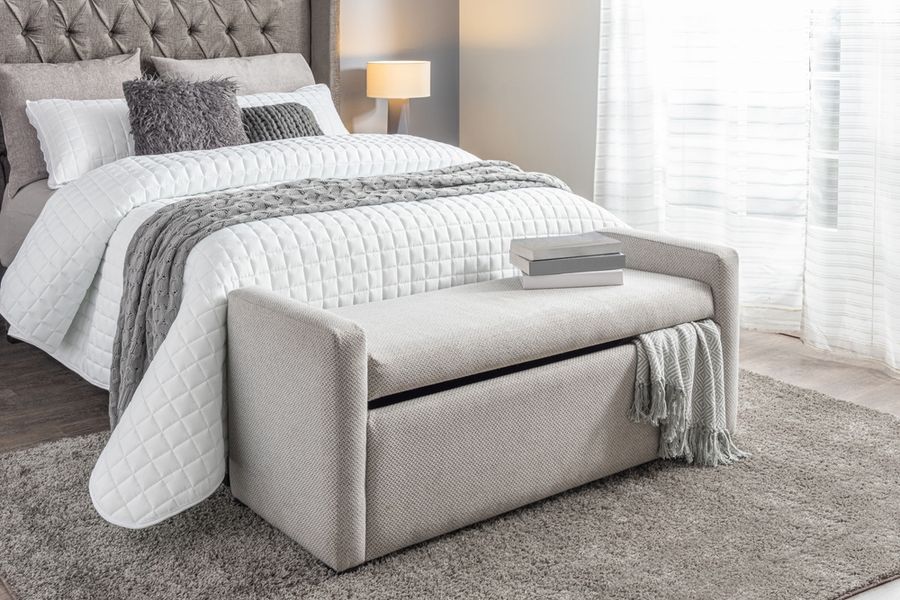
5. Choose a Bench With Hidden Storage
If you already want seating at the foot of the bed, choosing a bench with storage can give one piece of furniture two jobs. The interior can hold blankets, extra pillows, seasonal accessories, or other bulky items that consume disproportionate closet space.
The HomePop Large Storage Bench sold by Target combines seating with an interior storage compartment beneath a hinged lid and is specifically described for use as a bedroom bench. A design like this can be more space-efficient than adding a separate chair and another storage container.
Before purchasing one, measure the walkway between the foot of the bed and the opposite wall. Hidden storage is only useful if the bench does not make moving through the bedroom awkward.
6. Rotate Seasonal Clothing Instead of Storing Everything Together
Not every item of clothing needs prime closet or drawer space throughout the year. Heavy sweaters, winter accessories, swimsuits, and other strongly seasonal pieces can be rotated in and out of the most accessible storage areas as your needs change.
Use clearly labeled under-bed cases, bins, or another protected location for the off-season group. When the weather changes, swap those items with the clothing currently occupying your everyday drawers. The system works best when categories remain simple; one container labeled “winter accessories” is easier to maintain than numerous highly specific boxes.
While rotating, remove clothing you no longer wear rather than automatically returning everything to storage. That keeps seasonal storage from becoming a permanent holding area for forgotten belongings.
Make Every Storage Zone Earn Its Space
A larger closet is only one way to create more bedroom storage. Looking beyond the closet can reveal space beneath the bed, on walls and doors, inside bedside furniture, and within pieces that serve more than one purpose.
Start with the category creating the most visible clutter. Move seasonal items under the bed, small accessories onto appropriate hooks or door organizers, and everyday necessities into furniture with concealed storage. You do not need to implement all six ideas at once. A few well-chosen changes can make the bedroom easier to organize without filling it with additional cabinets or sacrificing valuable floor space.