

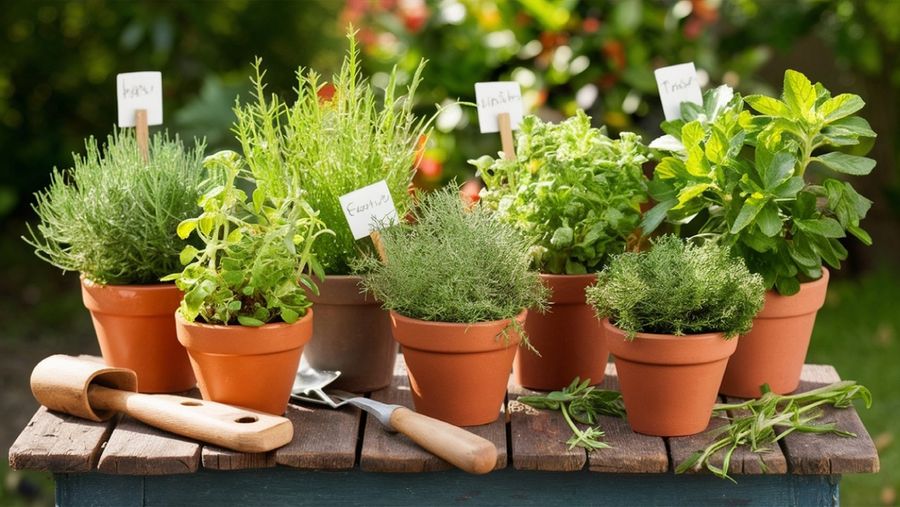
A patio or balcony can provide enough room for a useful herb garden without turning gardening into another demanding household chore. The key is to keep the setup small, choose herbs you actually cook with, and reduce avoidable maintenance from the beginning. Well-chosen containers, compatible plants, and an easy watering routine can give you fresh herbs within a few steps of the kitchen while keeping pruning, repotting, and daily attention to a manageable level.
Start With a Small Group of Useful Herbs
It is tempting to fill every available corner with different herbs, but a low-maintenance garden is easier to manage when every plant has a purpose. Start with three or four herbs that regularly appear in your cooking. Basil, parsley, rosemary, thyme, oregano, sage, and chives are all suitable choices for container growing.
Consider the conditions on your patio or balcony before choosing the final lineup. Many herbs perform best with several hours of direct sunlight, so watch the space during the day rather than assuming it receives “full sun.” Containers can also be moved if one corner receives noticeably better light, making a small garden easier to adjust than an in-ground bed.
Choose Pots That Reduce Watering Work
Containers need drainage holes and a well-drained potting mix so excess water can escape instead of remaining around the roots. Avoid simply filling decorative pots with soil if there is nowhere for water to drain. A functional container matters more than a perfectly coordinated set of planters.
Pot size also affects how much attention the garden requires. Smaller outdoor containers tend to dry out faster than larger ones, so choosing a somewhat larger pot can reduce how frequently you need to water. That does not mean every herb needs an oversized planter. Choose something large enough for the mature plant while still being practical to move if weather or sunlight makes relocation necessary.
Group Herbs With Similar Needs
Combining several herbs in one planter can save space, but the combination should make sense. Herbs differ in their moisture requirements, and plants sharing one pot are easier to care for when they need similar watering conditions. Thyme, sage, rosemary, and oregano can make a practical starting group for gardeners who frequently use Mediterranean-style herbs.
Mint is better treated differently. Mint spreads aggressively and can overwhelm other herbs sharing its container, so keeping it in a pot of its own makes it easier to control. Giving individual plants separate containers can also be useful when your favorites have very different water requirements, since you can adjust each one without affecting its neighbors.
Make Watering Easy to Remember
Container herbs still require regular checking, particularly during hot, dry weather. Rather than following an inflexible calendar, check the potting mix and pay attention to the needs of the herb. Some species prefer to dry somewhat between waterings, while others perform better with more consistent moisture.
Place the garden somewhere you naturally pass each day. A sunny spot near the patio door may be easier to remember than an isolated corner that you rarely see. Keep a watering can nearby if carrying one from the kitchen becomes an excuse to postpone the job. If you travel frequently or routinely forget to water, a drip system or self-watering planter may be worth considering, but a small collection of well-sized pots can remain manageable without additional equipment.
Harvest Regularly Instead of Letting Plants Take Over
Using your herbs is part of maintaining them. Pinching container herbs during the growing season can help keep plants bushier and more compact, while removing dead or diseased leaves keeps the plant tidier. Instead of waiting until you need a large quantity, harvest small amounts regularly for salads, marinades, sauces, drinks, and cooked dishes.
Avoid treating every herb exactly the same when cutting it back. Annual leafy herbs can generally tolerate a different harvesting approach from perennial herbs, which should be harvested more conservatively so they have enough growth remaining to continue developing. A clean pair of kitchen or garden shears stored near the patio door makes quick harvesting easier and removes another small barrier to actually using what you grow.
Keep the Garden Simple From Season to Season
A low-maintenance herb garden succeeds because it fits your routine, not because it contains the greatest number of plants. Start with herbs you already use, give them containers with good drainage, group compatible varieties together, and place the pots somewhere convenient enough that checking them becomes automatic.
As you learn which herbs thrive in your particular space, you can replace unsuccessful plants or add another favorite without redesigning the entire garden. A few productive containers can provide more practical value than a crowded balcony full of plants requiring constant attention. Keep the setup manageable, harvest what you grow, and let convenience guide any additions you make.