

Cold drafts around windows and doors can make an otherwise comfortable room feel chilly, especially during winter. The good news is that many small air leaks can be addressed without replacing the window or door itself. The most effective approach is to find the exact gap first, then match the repair to the part that is leaking. Weatherstripping, caulk, door draft blockers, and temporary window film can all play different roles in creating a tighter, more comfortable space.
Find the Leak Before Trying to Fix It
A draft may feel as though it is coming from an entire window, even when the actual problem is one small section of the sash or frame. Start by slowly moving your hand around the perimeter on a cold or windy day and noting where the temperature changes. Look for visible gaps and areas where existing weatherstripping appears flattened, torn, or missing.
A simple paper test can help identify poorly sealed movable sections. Close a window or door on a piece of paper and try to pull it free. If the paper slides out easily without tearing, that area may not be sealing tightly. Another option is to check the edges at night for visible light passing through places that should close completely.
Testing first prevents you from applying sealant everywhere and hoping something works. It also helps distinguish a small DIY repair from a larger problem involving the frame, installation, or surrounding wall.
Use Weatherstripping on Parts That Open and Close
Weatherstripping is intended for movable components such as operable windows and doors, where the material must create a seal while still allowing the unit to open normally. Caulk, by contrast, is generally used around stationary cracks and joints.
Inspect the existing weatherstripping before adding another layer. If it is cracked, loose, permanently compressed, or missing in sections, replacement may provide a cleaner result than stacking new material on top. Common options include adhesive-backed foam, rubber or vinyl seals, and tension-style strips. The appropriate style depends on the type of window or door and the size and location of the gap.
After installation, open and close the window or door several times. A good seal should reduce the gap without making locks, latches, or hinges difficult to operate.
Caulk Stationary Gaps Around Frames
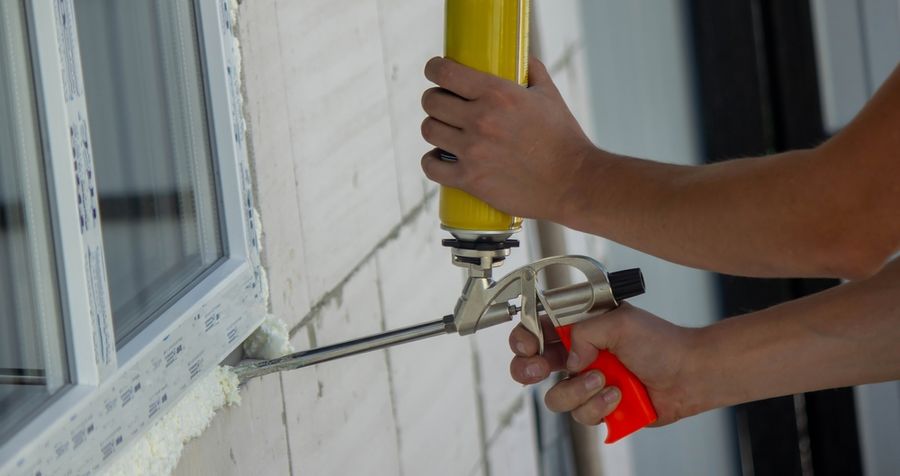
If the draft comes from where the window or door frame meets surrounding trim or another fixed surface, weatherstripping is usually not the right solution. Larger gaps behind accessible window or door trim may require foam backer rod with caulk or low-expansion spray foam.
Before applying caulk, remove loose or failing material and clean the surface so the new bead has a suitable place to adhere. Apply the sealant to the actual gap rather than covering a wide area unnecessarily. Different caulks are designed for different locations and materials, so check the product label for interior or exterior use and compatibility with the surfaces involved.
If trim must be removed or the gap appears unusually large, the project may be more involved than routine seasonal sealing. Extensive movement, water damage, deteriorated framing, or windows and doors that no longer sit correctly in their openings warrant closer investigation.
Stop Drafts at the Bottom of Exterior Doors
The space beneath an exterior door can create a noticeable stream of cold air, especially if the existing sweep is worn or the threshold no longer meets the bottom of the door effectively.
A door sweep attaches along the bottom edge and helps close the gap when the door is shut. A removable draft stopper can provide another simple option at the base of a door and can reduce air moving into or out of the living space.
Check the entire bottom edge rather than assuming the gap is uniform. Floors and thresholds are not always perfectly level, and a sweep adjusted too low can drag whenever the door moves. Aim for enough contact to block the opening without making the door difficult to use.
For renters, a removable draft stopper may also be easier to use than modifying the door itself.
Add Temporary Plastic Film to Particularly Drafty Windows
Some older or rarely opened windows may remain uncomfortable even after obvious gaps have been addressed. A temporary shrink-film window kit can add another barrier during the colder months. These kits typically use clear plastic film attached around the window with tape and tightened with a hair dryer.
When the film extends over the surrounding woodwork and is properly sealed, it can reduce drafts around the window and create an additional insulating layer of air that reduces heat loss through the window.
Temporary film is especially practical for windows you do not expect to open during winter. Keep in mind that covering a window can interfere with blinds, access, and normal operation. Follow the kit instructions carefully and avoid covering a window that needs to remain readily usable for ventilation or emergency egress.
Make the Smallest Repair That Solves the Problem
Stopping a cold draft does not automatically require replacement windows or a new exterior door. Start by finding the precise leak, then choose the repair that matches it: weatherstripping for movable joints, caulk for stationary cracks, a sweep or draft stopper at the bottom of a door, and temporary film for windows that need another seasonal barrier.
Recheck the area after completing each repair rather than tackling everything at once. If the draft disappears, you have probably solved the immediate problem. If cold air continues to enter around the frame despite intact seals, the source may be deeper within the window or door installation and worth having professionally assessed.