

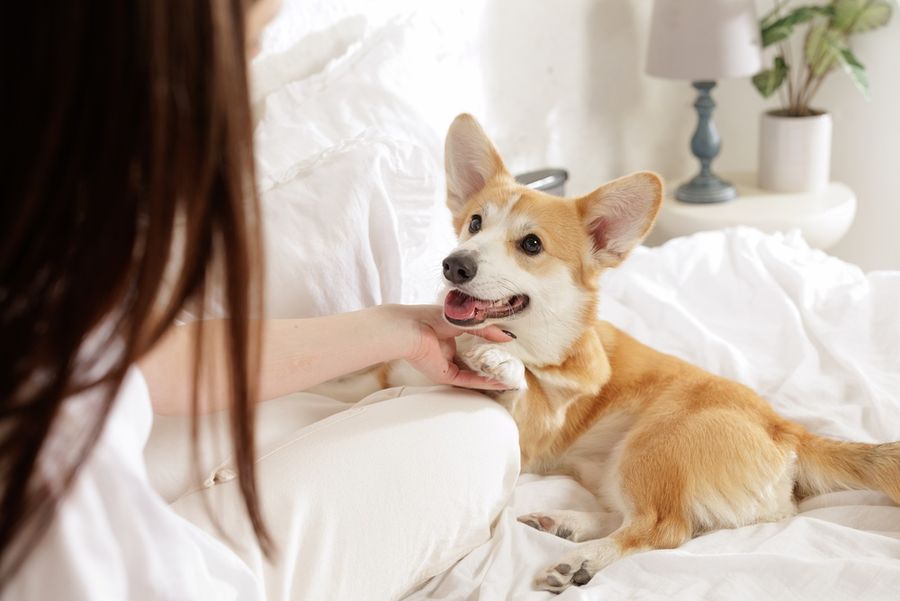
You haven’t said goodbye yet, but your dog is already watching from the hallway with suspiciously perfect timing. Maybe you picked up your keys, changed shoes, or simply started moving around the house differently. Dogs are remarkably good at noticing patterns in everyday life, especially when certain actions regularly lead to the same outcome. What feels like mind-reading is often careful observation, learned routines, and a strong awareness of human behavior working together long before the front door opens.
They Learn Your Daily Routine
Dogs are excellent at picking up repeated patterns. If you usually leave for work after breakfast, grab a bag around the same time, or head out shortly after putting on certain clothes, your dog may start connecting those events with your departure. After enough repetition, the routine itself can act like a signal that you're about to go.
Even small habits may matter. You might always refill a water bottle, turn off a particular light, or check the same window before leaving. You probably don't notice those actions because they're automatic, but your dog may be paying close attention. Dogs don't need to understand why you're doing something. They only need to learn that one familiar sequence often ends with you walking out the door.
Keys, Shoes, and Bags Become Powerful Clues
Certain objects can gain meaning because they repeatedly appear right before you leave. Keys are an obvious example. The sound of them jingling may be enough to send a dog toward the door or into a favorite waiting spot. Shoes, jackets, purses, backpacks, and work bags can all create similar associations.
Your dog may react before you've even touched the doorknob. If putting on sneakers usually means a walk, you may see excitement. If picking up a laptop bag usually means several hours alone, the reaction might look very different. Dogs learn through repetition, so ordinary household objects can start predicting what happens next. To you, they're simply things you need. To your dog, they can be part of a familiar chain of events.
Dogs Notice Changes in Your Body Language
People often move differently when they're getting ready to leave. You may walk faster, check the time, straighten your clothes, gather belongings, or move from room to room with more purpose. Dogs are highly attentive to posture, movement, facial expressions, and other physical signals, so subtle changes can stand out.
You might not realize you're acting any differently, but your dog sees you every day. That gives them plenty of opportunities to learn what relaxed behavior looks like compared with getting-ready-to-go behavior. Even the direction you walk or the way you reach for something can offer information. A dog that's especially tuned in to its owner may notice the shift well before any obvious departure cue appears.
They May Recognize Time-Based Patterns
Dogs don't read clocks, but many seem surprisingly good at anticipating recurring parts of the day. Meals, walks, bedtime, and departures often happen on fairly predictable schedules. Changes in light, household noise, activity levels, and familiar routines may all help a dog recognize when certain events are likely to happen.
If you leave around 8 a.m. most weekdays, your dog may start anticipating that part of the morning before you grab your keys. The same can happen when someone usually returns home around dinner or takes the dog outside before bed. It's less about knowing an exact time and more about recognizing a collection of environmental and behavioral cues that tend to occur together.
They Pay Attention to Your Emotional Energy
Dogs can also react to changes in your mood and behavior before a departure. If you're rushing, distracted, stressed, or unusually focused on getting out the door, your dog may pick up on that shift. Some dogs respond by following more closely, while others may become quiet, restless, or watchful.
Your emotional state isn't necessarily telling your dog exactly where you're going. Instead, it may add another clue to a pattern they've already learned. A calm Saturday morning feels different from a hurried weekday departure, especially when other familiar cues are present. Dogs spend a lot of time observing the people they live with, so even small changes in tone of voice or movement can help them anticipate what might happen next.
Your Dog Has Had Plenty of Practice Watching You
Most dogs get hundreds or even thousands of opportunities to observe their owners leaving home. Over time, that creates a huge amount of repetition. Your dog has seen the same sequences play out again and again, which makes it easier to predict what comes next.
A typical departure might include several clues:
- You change into certain clothes
- You put on shoes
- You check your phone
- You grab keys or a bag
- You move toward the front door
- You switch off lights
- You say a familiar phrase
- You give your dog a quick pat before leaving
Individually, each clue may mean very little. Together, they can form a pattern that's incredibly easy for a watchful dog to recognize.
Your Routine Is More Predictable Than You Think
Dogs can seem almost psychic when they know you're leaving before you've announced it, but the explanation is usually much simpler. They spend a lot of time watching, listening, and learning from the people around them. Repeated routines, familiar objects, body language, and timing can all provide clues that humans barely notice.
In many ways, your dog probably knows your habits better than you do. The tiny actions you perform without thinking may look like a clear sequence from their perspective. So when your dog is already waiting by the door before you've picked up your keys, they probably aren't reading your mind. They've just gotten very good at reading you.