

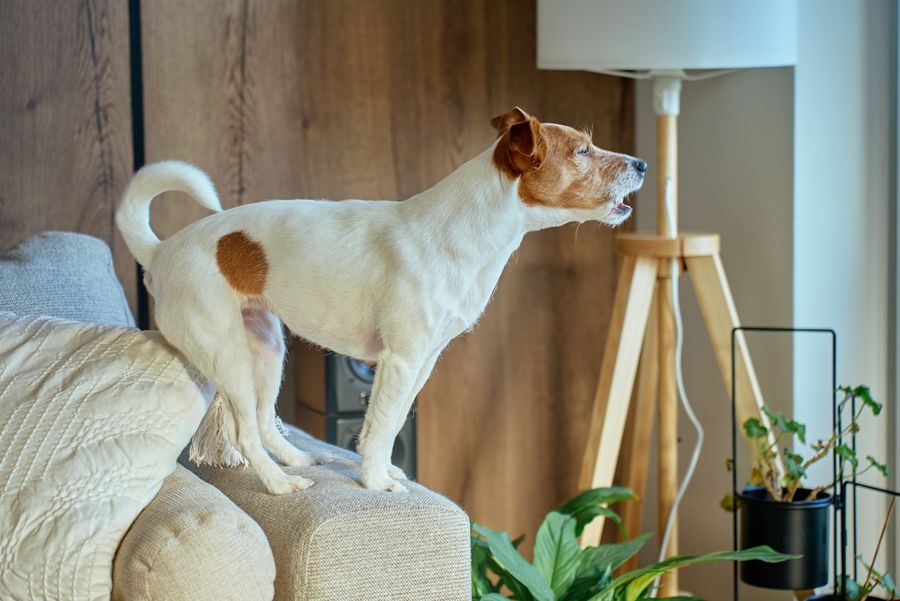
A delivery truck rolls past, a neighbor walks a dog, or a leaf blows across the yard, and suddenly your dog is sounding the alarm. Telling them to stop may quiet the room for a moment, but the reaction often returns with the next trigger. Barking at outdoor sights and sounds can come from excitement, fear, territorial behavior, or simple habit. Understanding what your dog notices outside can make the behavior much easier to manage and gradually change.
Understanding Territorial Behavior
Dogs can react to movement, people, animals, vehicles, and sounds around the home for several reasons. Territorial behavior is one possibility, particularly when a dog responds to unfamiliar people or animals approaching familiar space. Fear, excitement, greeting behavior, and learned attention can also play a role.
The problem can quickly spill into everyday life. A dog may race from window to window, interrupt naps, react during work calls, or become difficult to redirect when someone approaches the front door. Owners may start closing rooms or constantly telling the dog to be quiet without understanding why the reaction keeps returning.
Why the Reaction Can Keep Reinforcing Itself
Outdoor triggers often disappear shortly after a dog reacts. The mail carrier approaches, the dog barks, and the mail carrier walks away. From the dog's point of view, the reaction may appear to have worked. Repeated opportunities to perform the same response can make the pattern harder to interrupt, particularly when the dog is allowed to watch the trigger for long periods. VCA notes that some door and window barking can be self-rewarding because the dog gets the outcome it wants, such as an approaching person leaving or eventually coming inside.
A common misunderstanding is that a dog who reacts to everything outside is simply being stubborn. The motivation matters. A fearful dog isn't having the same experience as an excited dog that wants to greet everyone. The practical trade-off is that management can feel less satisfying than active training, but reducing repeated practice of the unwanted response can make later training much easier.
Break the Pattern Before Asking for a New Response
Changing the behavior usually works better as a coordinated process than as a single command shouted from across the room. Start by reducing opportunities to rehearse the reaction. Once your dog can stay calmer around the environment, teach a different response to familiar triggers and reward the behavior you actually want.
Progress may look different depending on what sets your dog off. A dog reacting to pedestrians through one front window may need a different setup from a dog that reacts mainly to the doorbell. The first goal is creating situations where learning is possible instead of waiting until your dog is already highly worked up.
Limit the View That Keeps Setting Your Dog Off
If the reaction starts when your dog sees people or animals outside, changing the environment can provide immediate breathing room. Curtains, blinds, removable window film, furniture placement, or limiting access to a particular room can reduce the visual triggers that repeatedly start the response. Blocking a territorial dog's view of passing people and animals is one management strategy recommended for reducing opportunities to guard the area.
Management isn't the same as giving up on training. It creates calmer periods when your dog isn't constantly practicing the behavior you're trying to change. If the front window overlooks a busy sidewalk, for example, restricting access during high-traffic periods can make the household quieter while you work on a new response separately.
Teach Your Dog Somewhere Else to Go
Trying to stop an unwanted response without teaching an alternative can leave your dog with no clear idea of what to do instead. A mat, bed, or designated resting place can provide a specific destination when someone passes the window or approaches the door.
Train the behavior during calm periods before adding difficult distractions. Reward your dog for going to the spot, sitting or lying down, and remaining there briefly. VCA recommends teaching an alternative behavior such as going to a mat because resting in one location is incompatible with rushing toward the door or window at the same moment.
Once the behavior is familiar, begin using it around easier versions of real triggers. Expecting a brand-new skill to work during the most exciting delivery of the week is likely asking too much too soon.
Reward Calm Behavior Around Familiar Triggers
Dogs need feedback for the behavior you want to see more often. Quietly noticing a passerby, turning toward you, walking away from the window, or settling on a mat can all create opportunities for reinforcement. UC Davis recommends positively reinforcing quiet behavior and teaching attention cues that can interrupt an unwanted response.
For dogs that react from fear, gradual exposure may need to happen at a level where the trigger doesn't immediately produce a full reaction. Desensitization gradually introduces the trigger without pushing the dog into the unwanted response, while counterconditioning pairs the trigger with something positive.
Keep in mind that yelling can work against the goal. Loud responses may add more excitement, and punishment can worsen the situation when fear or anxiety is driving the behavior.
What Improvement Can Realistically Look Like
Success doesn't have to mean your dog never makes another sound at the window. A more realistic goal may be fewer reactions, shorter episodes, easier redirection, or a dog that notices someone outside and then looks to you instead of racing through the house.
Some triggers may remain harder than others. Delivery workers, unfamiliar dogs, or people approaching the front door can produce a stronger reaction than someone walking across the street. Consistent management and reinforcement give your dog more chances to practice calmer responses, but individual temperament and motivation still matter.
Safety also changes the plan. If the behavior includes severe fear, lunging, snapping, or concern that someone could be injured, professional help is appropriate. VCA recommends consulting a behavior professional when high fear, frustration, or excitement creates an injury concern.
Decide Which Part of the Pattern Needs Attention First
If your dog spends much of the day patrolling windows, start with the environment. Reducing access to the busiest views can stop constant rehearsal and give you calmer opportunities to work on training.
If your dog can notice a trigger without immediately losing focus, prioritize an alternative behavior and reinforcement. Practice moving to a mat, looking toward you, or remaining quiet around easier distractions before asking for the same response during a more exciting event.
If fear appears to drive the reaction, don't focus only on stopping the noise. Work at a level your dog can handle, and consider professional guidance if the response is intense or difficult to manage safely.
Make the Outside World Less of a Full-Time Job
Your dog may keep reacting to everything outside because the sights and sounds around home repeatedly trigger territorial, fearful, excited, or learned responses. Simply telling a dog to stop doesn't change the pattern that keeps setting the reaction in motion.
Start by identifying the trigger your dog reacts to most often. Reduce unnecessary access to it, then practice one calm alternative behavior when the environment is manageable. Giving your dog a different job can make the window feel less like something they need to monitor all day.