

Making balanced meals at home often becomes difficult for a simple reason: preparation takes time. Washing produce, chopping vegetables, cooking several components, and cleaning up afterward can turn an ordinary dinner into a project. The right kitchen tools can remove some of that friction without dictating what you eat. By making repetitive tasks faster or allowing ingredients to cook with less supervision, a few practical tools can make everyday meal preparation considerably easier to manage.
1. A Food Processor Handles the Repetitive Prep
A food processor earns its counter space when several ingredients need the same kind of prep. Current models can chop, slice, shred, mix, and purée, depending on the blade or disc installed. That range is useful when a meal involves shredded cabbage for slaw, sliced vegetables for roasting, chopped herbs for a sauce, or beans blended into a dip.
The real advantage is batching. Instead of cutting one carrot, onion, or zucchini at a time, you can process enough vegetables for dinner plus another meal. Use the machine for the jobs that actually slow you down. A knife may still be faster for a single tomato, while a processor becomes more valuable when repetitive cutting is the problem.
2. A Salad Spinner Makes Greens Easier to Prep Ahead
A salad spinner solves a small problem that often makes salads feel less convenient: wet greens. A spinner is designed to remove water from washed salad greens, and some models use a basket that can also function as a colander. Once greens are washed and dried, they are ready to combine with vegetables, grains, beans, eggs, chicken, fish, nuts, or seeds.
This tool also makes batch preparation more realistic. Wash enough lettuce, kale, or other sturdy greens for more than one meal, spin them thoroughly, and store them appropriately for later use. The same basket can help with rinsing herbs or other produce. Reducing one annoying prep step can make vegetable-based meals easier to assemble on a busy night.
3. A Multi-Cooker Can Consolidate Several Cooking Jobs
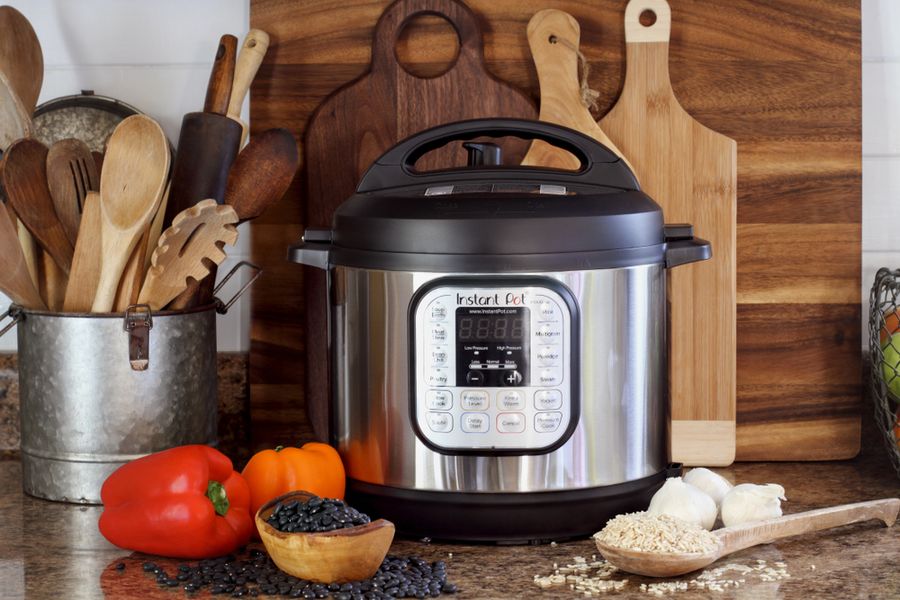
A multi-cooker is useful when the bottleneck is managing several pans at once. A top appliance, like the Instant Pot Pro Pressure-Cooker, may pressure-cook, slow-cook, sauté, steam, cook rice, and keep food warm. Those functions can cover components that appear regularly in home meals, including grains, beans, soups, stews, vegetables, and proteins.
Think of it as a way to simplify sequences rather than as a shortcut for every recipe. You might sauté aromatics, add beans and other ingredients, and finish the dish without moving to another pot. On another night, the cooker can handle rice while you prepare vegetables and protein elsewhere. Fewer active burners can make dinner feel less chaotic, especially in a small kitchen.
4. A Blender Turns Separate Ingredients Into Useful Components
A blender can do more than make breakfast smoothies. High-performance models are designed for jobs such as smoothies, soups, dressings, and sauces. Those capabilities can turn produce, herbs, yogurt, nuts, seeds, beans, or other ingredients into useful meal components without requiring a long list of separate preparations.
A blended dressing can change a basic grain-and-vegetable bowl, while a puréed soup can use vegetables that need to be cooked soon. A smoothie can combine fruit with yogurt or another preferred protein-containing ingredient when a sit-down breakfast is impractical. Identify two or three repeatable jobs for the blender rather than saving it only for occasional recipes.
5. A Rimmed Sheet Pan Simplifies Batch Cooking
A rimmed sheet pan is one of the least complicated tools on the list, which is exactly why it is useful. Its broad surface lets you roast several ingredients at the same time when their cooking times and temperatures are compatible. Vegetables can occupy one section while a protein cooks on another, or you can roast a large batch of vegetables for bowls, wraps, salads, and side dishes later in the week.
The rim helps contain juices, oils, and smaller pieces as food cooks. More importantly, avoid overcrowding ingredients simply to fit everything into one batch. Two pans can be more practical than one overloaded pan when you want ingredients to roast rather than sit tightly packed together.
Make Convenience Work for Your Routine
Convenience does not require collecting every appliance marketed as a time-saver. A food processor is most valuable when chopping and shredding slow you down; a salad spinner helps if greens are a regular part of your meals; a multi-cooker can reduce stovetop juggling; a blender handles repeatable liquid and puréed components; and a sheet pan makes batch roasting straightforward.
Choose the tool that removes the most common point of friction in your own kitchen. Then build a few repeatable meals around it, such as grain bowls, sheet-pan dinners, soups, salads, or breakfast blends. A balanced routine becomes more manageable when the equipment supports ingredients you already like and cooking methods you are willing to use on an ordinary Tuesday night.